Comparison: Galaxy S26 Ultra vs iPhone 17 Pro Max — Android’s Flagship vs iOS’s Flagship
Each brand's priciest flagship, side by side: display, camera, battery, and what justifies the price on each one.
Main keyword: Galaxy S26 Ultra vs iPhone 17 Pro Max

The real question isn't which one is "better"
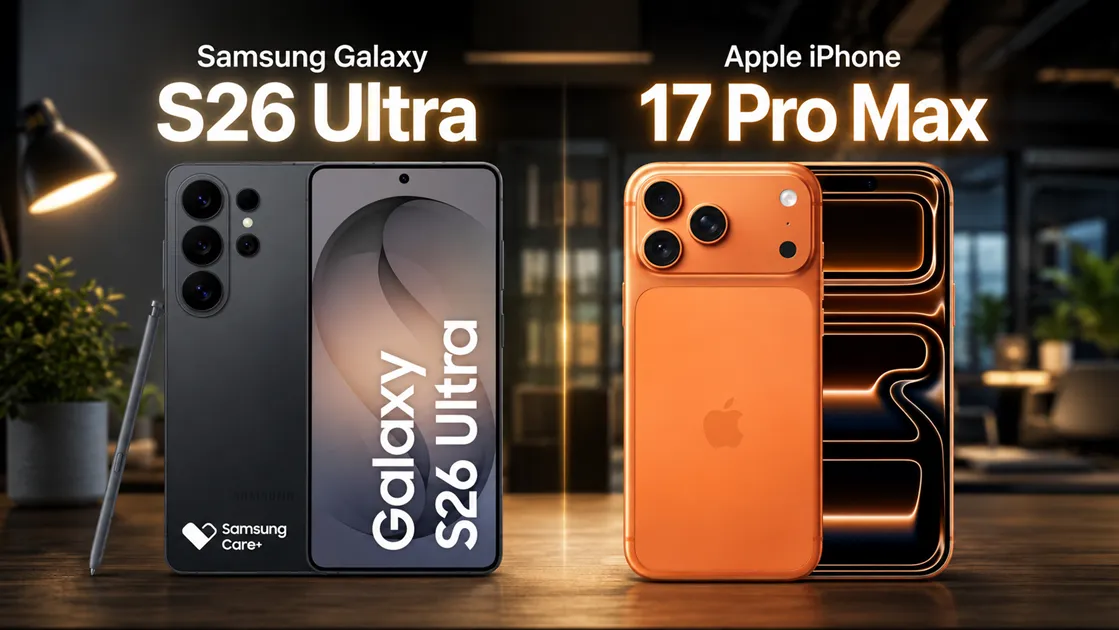
Both phones represent the absolute top of each maker's lineup in 2026 — similar screen size, price in the same range, and the same target audience: people who want the most advanced tech available, regardless of cost. The real difference isn't in isolated spec-sheet numbers, but in ecosystem decisions: Android with contextual AI and full customization, versus iOS with closed integration and predictability.
Display
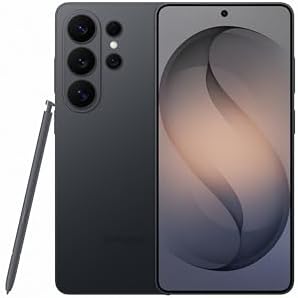
Both arrived this generation with screens of nearly identical size: the Galaxy S26 Ultra has a 6.9" Dynamic LTPO AMOLED 2X display, 1440 x 3120 resolution, 120Hz, and up to 2,600 nits of brightness, with a feature no competitor has: the mobile market's first privacy screen, which narrows the viewing angle to shield your information from side glances. The iPhone 17 Pro Max, meanwhile, packs a 6.9" Super Retina XDR OLED display, 2,868 x 1,320 resolution, 120Hz ProMotion, and up to 3,000 nits peak brightness — slightly brighter on paper — with Ceramic Shield protection against drops and scratches.
Cameras: where each brand bets differently
Both invest heavily, just in different directions. The Galaxy S26 Ultra keeps its quad-camera setup with 3x and 5x telephoto lenses, covering everything from portraits to long-range zoom, and shoots video up to 8K at 30fps and 4K at 120fps. The iPhone 17 Pro Max goes with its Fusion Pro system: a 48MP main sensor with advanced stabilization, a 48MP periscope lens with 5x optical zoom, a 48MP ultrawide, and a 3D LiDAR scanner, shooting up to 4K at 120fps plus 3D spatial capture. In practice, both deliver 5x optical zoom — the real-world difference usually comes down to each brand's image processing (color tone, HDR, sharpness) more than the raw spec sheet.
| Item | Galaxy S26 Ultra | iPhone 17 Pro Max |
|---|---|---|
| Display | 6.9" AMOLED, 120Hz, 2,600 nits, privacy screen | 6.9" OLED, 120Hz, 3,000 nits, Ceramic Shield |
| Battery | 5,000 mAh | 5,088 mAh |
| Main camera | Quad-camera system, 3x and 5x zoom | Fusion Pro 48MP system, 5x zoom + LiDAR |
| Weight | 214g | ~224g |
| Charging | 60W wired, 25W wireless | 40W wired, 25W MagSafe |
| Chip | Snapdragon 8 Elite Gen 5 for Galaxy | Apple A19 Pro |
| Reference price | $900 to $1,300 | starting around $1,100 |
Pros
- + 1st – Galaxy S26 Ultra has the only native privacy screen on the market
- + 2nd – iPhone 17 Pro Max shoots 3D spatial video and has LiDAR, an Apple-exclusive feature
- + Both offer faster charging than the previous generation and IP68 certification
Cons
- − 1st – Galaxy S26 Ultra lost some anti-reflective coating efficiency on the display to make the privacy mode possible
- − 2nd – iPhone 17 Pro Max stays locked to the Apple ecosystem for features like Live Translation and the newest AI capabilities
- − Both easily cross $ 1.000 for their entry-level versions
Frequently asked questions
Galaxy S26 Ultra or iPhone 17 Pro Max: which one is better?
It depends on the ecosystem you already use: the Galaxy S26 Ultra is the right choice for those who live in Android and value personalization, while the iPhone 17 Pro Max pays off for those already in the Apple ecosystem who prioritize long-term software consistency.
Which one has the better screen?
In peak brightness, the iPhone 17 Pro Max has the edge, with 3,000 nits versus 2,600 nits on the Galaxy S26 Ultra. But the Galaxy S26 Ultra has an exclusive feature: the first privacy screen in the mobile market, which protects the display from side viewing angles.
Do both phones have 5x optical zoom?
Yes. The Galaxy S26 Ultra has 3x and 5x telephoto lenses, and the iPhone 17 Pro Max has a periscope lens with 5x optical zoom. The difference in final results comes down more to each brand's image processing than to the spec sheet itself.
Which phone has the bigger battery?
The iPhone 17 Pro Max has a slightly bigger battery, at 5,088 mAh versus 5,000 mAh on the Galaxy S26 Ultra. But the Galaxy S26 Ultra charges faster, at 60 W versus 40 W on the iPhone.
Does the iPhone 17 Pro Max record video in 3D?
Yes, the iPhone 17 Pro Max has 3D spatial capture and a LiDAR scanner, exclusive Apple features that the Galaxy S26 Ultra doesn't offer.
Is it worth switching ecosystems to buy one of these phones?
Not recommended. The decision between the two comes down more to which ecosystem you already use (Android or Apple) than to any single spec difference between the two devices.
Nota de transparência: este conteúdo pode conter links de afiliado. Se você comprar através deles, o Decode Layer pode receber uma comissão, sem custo adicional para você.
Battery and charging
On paper, the difference is small: 5,000mAh on the Galaxy S26 Ultra versus 5,088mAh on the iPhone 17 Pro Max. For charging, Samsung has the speed edge — 60W wired versus 40W on the iPhone — but real-world battery life depends far more on how each brand's software manages background power than on raw battery capacity alone, so we're avoiding pinning down a "measured runtime" number without a proper controlled test.
Verdict by use case
Choose the Galaxy S26 Ultra if you're already living in the Android ecosystem, value customization, and want this generation's most innovative feature — the privacy screen. Choose the iPhone 17 Pro Max if you're already in the Apple ecosystem, prioritize long-term software consistency, and want features like 3D spatial capture. Between the two, the decision comes down more to the ecosystem you're already in than to any single isolated spec difference.
Where to buy
Apple iPhone 17 Pro Max, US Version, 256GB, eSIM, Deep Blue- Unlocked (Renewed) | 256GB, US Version — $1,189.99. Buying through the link below supports Decode Layer at no extra cost to you.
Affiliate link. As an Amazon Associate, we may earn a commission from qualifying purchases.