Featured review

Quantum Computing Explained: What’s Real in 2026 and What’s Still Science Fiction

Quick answer: quantum computing uses qubits — quantum versions of the regular bits your computer uses — that can represent multiple states simultaneously, letting certain types of problems be explored far faster than a classical computer could. As of 2026, quantum computers are real, working, and improving fast: companies including Google, IBM, Microsoft, and Quantinuum have all demonstrated working error correction, which was the field's biggest technical bottleneck for over a decade. But quantum computers are not faster general-purpose computers, they won't replace your laptop, and a computation that meaningfully outperforms classical computers on a real-world, commercially useful problem hasn't happened yet — that milestone, often called practical "quantum advantage," is still expected years away, with most fault-tolerant roadmaps targeting around 2029.

Tested for
30 days
Read time
6 min
Quantum Computing Explained: What’s Real in 2026 and What’s Still Science Fiction
independent reviews //30-day testing //no copy-pasted press releases //reproducible measurements //affiliate transparency //independent reviews //30-day testing //no copy-pasted press releases //reproducible measurements //affiliate transparency //independent reviews //30-day testing //no copy-pasted press releases //reproducible measurements //affiliate transparency //independent reviews //30-day testing //no copy-pasted press releases //reproducible measurements //affiliate transparency //

Recent posts

46 posts
OLED vs Mini-LED vs Micro-LED: What’s Actually Different

OLED vs Mini-LED vs Micro-LED: What’s Actually Different

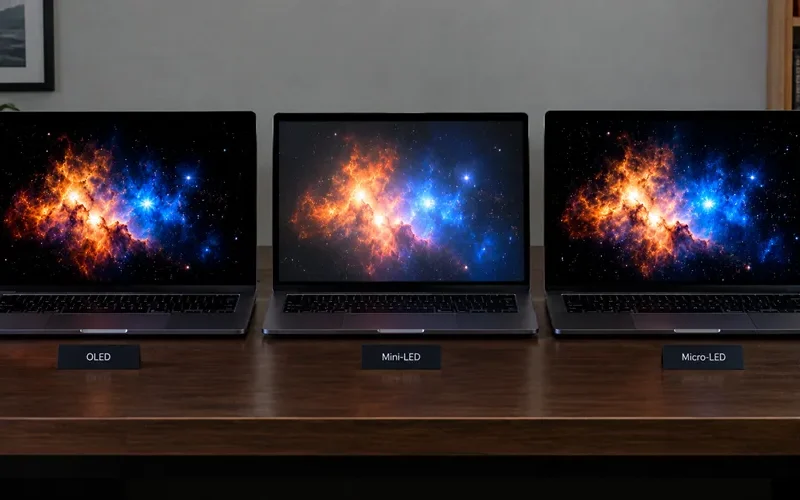
Quick answer: OLED produces the deepest blacks and best contrast because each pixel lights itself independently and can turn fully off — but it's more prone to long-term brightness degradation ("burn-in") with static images. Mini-LED is a backlighting upgrade for traditional LCD screens, using thousands of tiny LEDs grouped into dimming zones to get closer to OLED-like contrast, without the burn-in risk, usually at a lower price. Micro-LED is the newest and most expensive technology, combining OLED's per-pixel control with LED's brightness and longevity — but it's still mostly limited to premium, large-format displays as of 2026. For most people buying a laptop, monitor, or TV today, the real choice is between OLED and Mini-LED; Micro-LED remains a future-facing, high-end option.

Read review
What Is an NPU? The AI Chip in Every New Laptop and Phone, Explained

What Is an NPU? The AI Chip in Every New Laptop and Phone, Explained

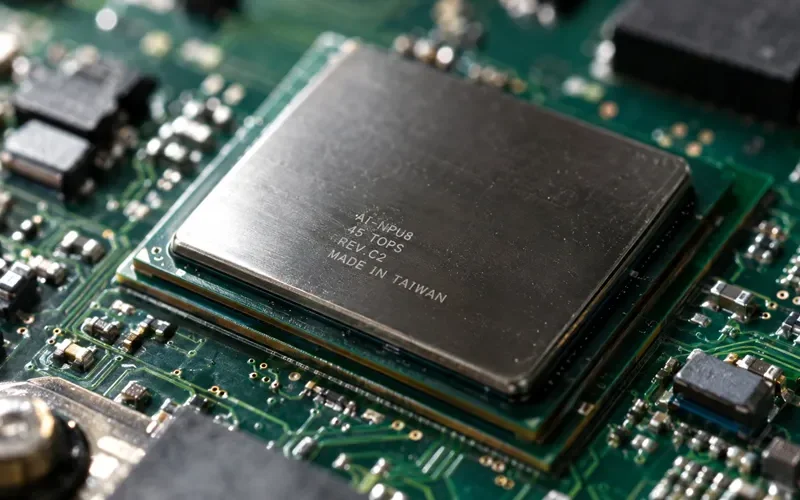
Quick answer: an NPU (Neural Processing Unit) is a dedicated chip built specifically to run AI tasks — like voice recognition, image generation, and live captions — directly on your device, instead of sending that work to a data center over the internet. It's not a replacement for your CPU or GPU; it's a third specialized processor that handles AI inference far more efficiently, using a fraction of the power a CPU or GPU would need for the same task. As of September 2026, every current flagship chip from Intel, AMD, Qualcomm, and Apple ships with one, and Microsoft requires at least 40 TOPS of NPU performance for a laptop to carry the "Copilot+ PC" label.

Read review
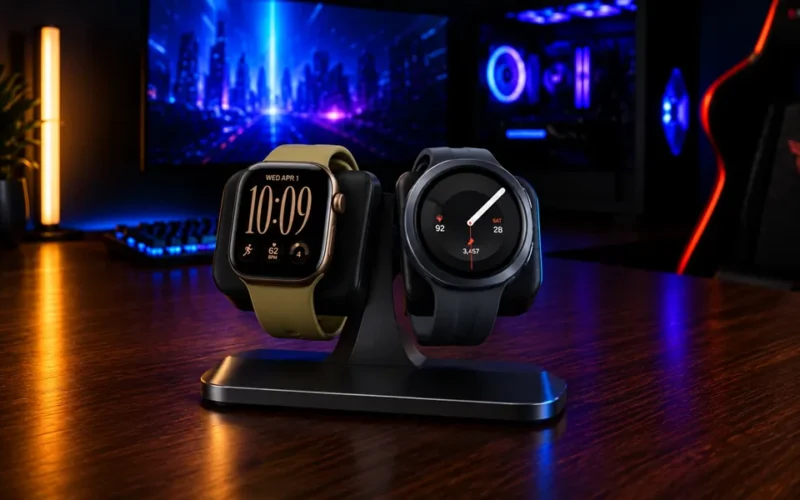
Apple Watch Series 12 vs Galaxy Watch 9: Which Is Worth It in 2026?

Apple Watch Series 12 vs Galaxy Watch 9: Which Is Worth It in 2026?

Quick answer: if you own an iPhone, the Apple Watch Series 12 ($399) is the only real option — it doesn't pair with Android at all. If you own an Android phone, the Galaxy Watch 9 (from $379.99) is your pick for the same reason. For the small group who could genuinely choose either (i.e., deciding which phone ecosystem to commit to), the Apple Watch Series 12 wins on AI depth and sensor sophistication, while the Galaxy Watch 9 wins on battery life and update longevity (5 years of OS support vs Apple's typical shorter window). Full breakdown below.

Read review

A weekly edition on what's actually worth buying.

New reviews, relevant price drops, and launch alerts.

Categories